Everyday Pricing
Pricing at a company this size doesn't live in one place. I mapped the chaos, defined the real workflow, and designed a tool people would actually use.
Pricing tool interface
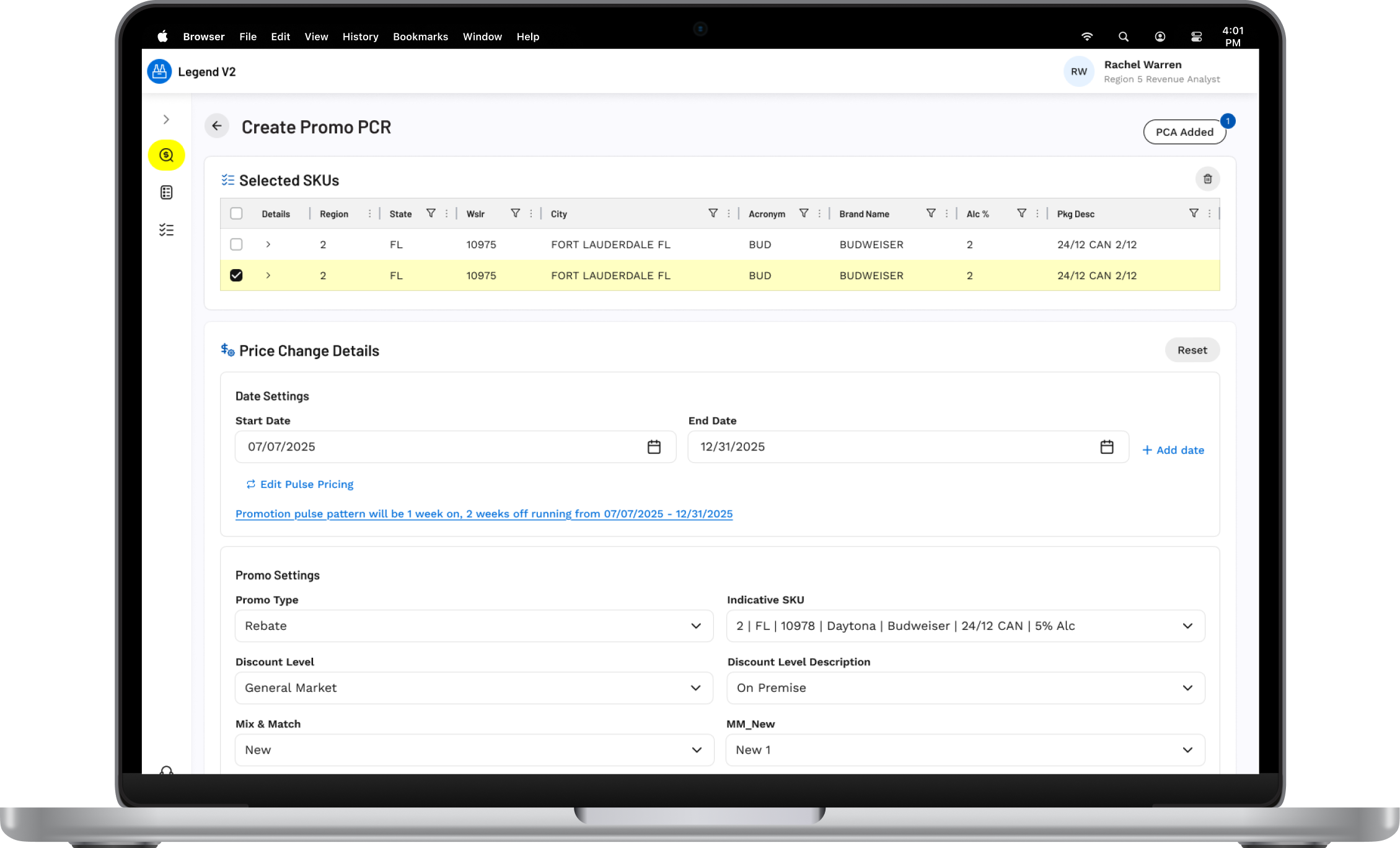
The problem
Pricing decisions at a company this size don't live in one place. When I joined this initiative, the process was fragmented across multiple systems: Excel was the preferred method (and had been for years), critical context lived in email threads, raw data came from a legacy internal tool that queried the data, and there was an existing solution in Palantir that nobody wanted to use.
The Palantir implementation was technically capable but widely distrusted. Users found the UI overly complex for what they actually needed, and more critically, they didn't trust the data. When people don't trust the system, they build workarounds. In this case, the workaround was a sprawling network of spreadsheets that only a few people fully understood.
"Some of the data you end up seeing can be inaccurate. It's not very user-friendly visually, and it doesn't build trust"
My role
My job wasn't to make it pretty. It was to make it make sense. I partnered with my PM to untangle what existed and define what the workflow actually needed to be.
Led discovery sessions with stakeholders across multiple business units
Mapped existing processes and identified bottlenecks
Defined requirements in collaboration with PM and engineering
Designed the end-to-end workflow and interface
Facilitated alignment between teams with competing priorities
The approach
Before designing anything, we needed to understand what actually happened. The existing process had evolved organically over years, with different teams doing different versions of the same thing.
Discovery
Interviewed stakeholders across business units to understand how pricing decisions were actually made versus how they were supposed to be made.
Process Mapping
Documented the current state: who does what, where data lives, what breaks down, and where decisions get stuck.
Definition
Worked with PM to define what the workflow should be, identifying which steps were essential and which were artifacts of outdated processes.
Design & Validation
Designed the tool interface and workflow, validating with users at each stage to ensure it matched how they actually needed to work.
Artifacts
Pricing Users

Region Pricing Analyst
Submit data-driven pricing decisions that maximize regional sales while adhering to company policies.
Highest PCR (Price Change Request) submission volume

Revenue Management
Review PCRs to ensure alignment with pricing strategy, revenue targets, and brand principles.
10-15K reviews annually

Price Ops Coordinator
Execute approved changes in system of record and bring pricing decisions to market.
Most time spent in tool

Commercial Manager
Ensure pricing strategies support commercial team goals and market competitiveness.
Initiates pricing requests
Process
Process Map Artifact
Process Map Figma Artifact
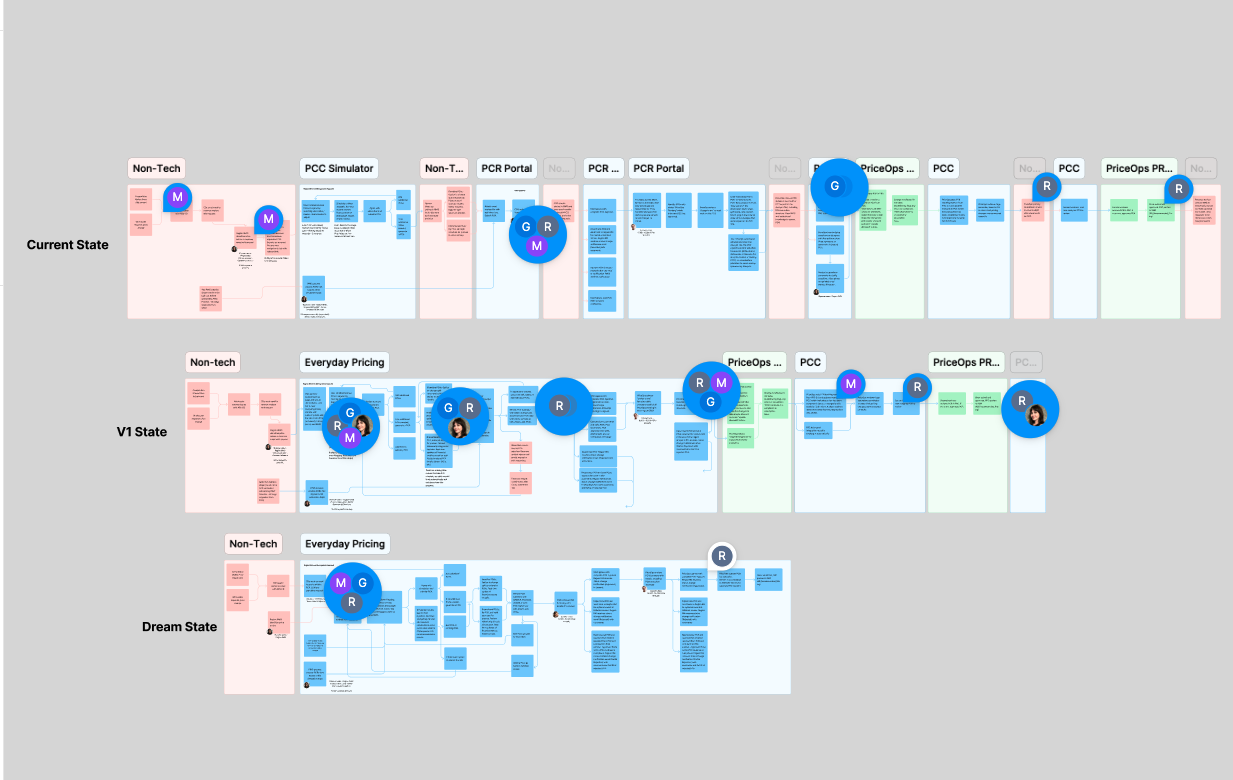
User Journey
Before - Fragmented across systems
external triggers
Field communication
handoff
Internal system fragmentation (the pain)
after - simplified flow
external trigger
Competition or wholesaler initiates request
RMSI Receives
Analyst identifies pricing action needed
Create & Submit
Simulate, review, submit in one place
Review & Approve
Routing and tracking automated
Execute
Push to system of record
Confirm
Automated notification to requestor
✓ Consolidates 4 systems into one